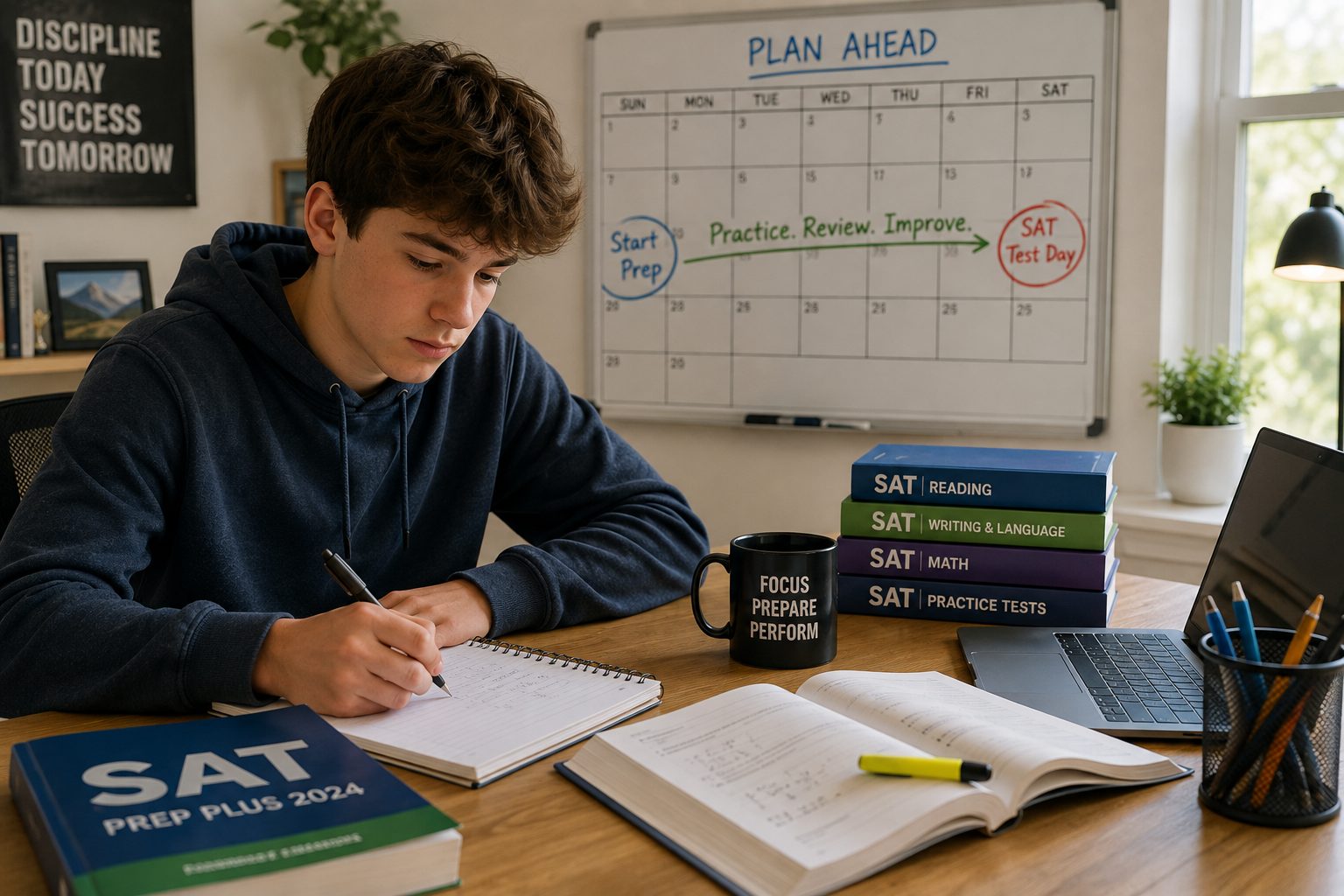
Here is something I have watched happen for more than twenty years. A motivated student decides in October of junior year to get serious about the SAT. Then the chemistry teacher assigns a lab report, the history teacher schedules a test, there is a game on Thursday and a recital on Saturday, and the SAT slides to the bottom of the pile. By March they have done maybe four hours of real prep, spread so thin that none of it stuck.
Now compare that to the student who made the same decision in July. Same intent, same materials, wildly different results. The difference is not the student. The difference is that summer SAT prep gets to happen when the student's brain is not already full.
Why the summer months produce bigger score gains
The SAT rewards two things: understanding the content and getting comfortable with the format. Both take repetition, and repetition takes uninterrupted time. During the school year, that time simply does not exist. Your son or daughter is carrying five or six classes, each one competing for the same evening hours. Test prep becomes the thing they do when everything else is done, which means it becomes the thing they never do.
Summer flips that. For eight or nine weeks, there is no homework, no pop quizzes, no group project due at midnight. The student can sit down with a real practice section and actually focus on it. When something is confusing, there is time to slow down and figure out why instead of racing to the next assignment. That slowing down is where the real learning lives.
There is also a mental piece that matters more than people think. During the school year, the SAT feels like one more source of stress piled on top of an already stressful load. In the summer it feels like a project. Same test, completely different relationship to it. I have seen students who dreaded the SAT in April genuinely enjoy working on it in June, once it was the only academic thing on their plate. A student who is not panicking learns faster, and it shows in their scores.
The digital SAT actually makes summer prep easier
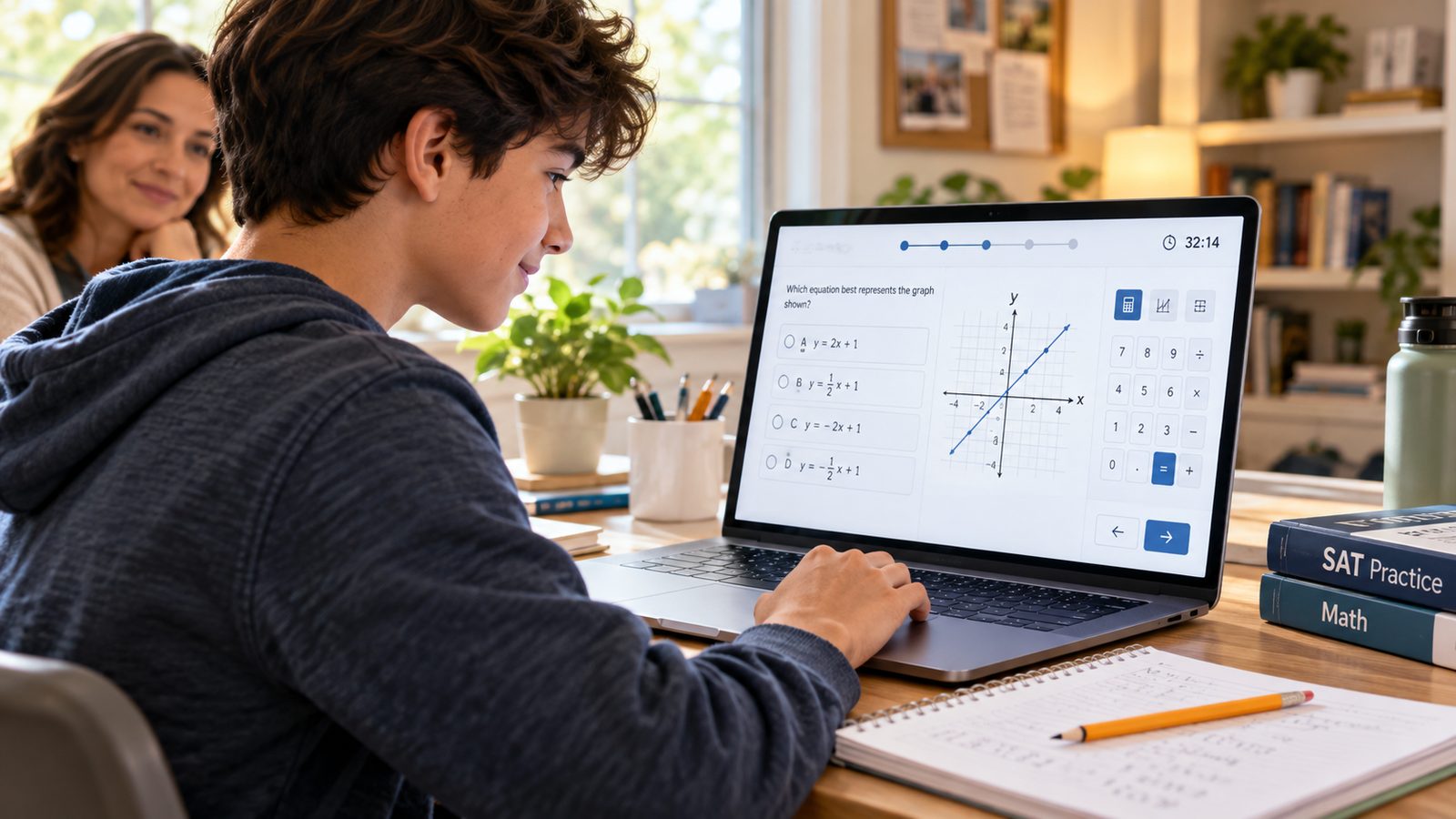
A quick note on the test itself, because it changed and a lot of families are working from old information. The current SAT is digital and taken through the College Board's Bluebook app. It is shorter than the old paper version, around two hours and fourteen minutes, split into a Math section and a Verbal section, each delivered in two adaptive modules. The Desmos calculator is built in and allowed throughout, so there is no separate no-calculator section to worry about anymore.
Why does this matter for summer? Because getting comfortable with a digital, adaptive format takes reps in the actual app, and reps take time. This is not something you cram the week before. A student who spends the summer getting fluent with Bluebook and Desmos walks into the fall test already at home in the environment, which is a real advantage over the student seeing it for the first time on test day.
A realistic summer plan
Summer prep works best when it is light and consistent, not a boot camp. Here is a plan I would give any junior heading into their prep summer.
Take a full practice test in June. Before you do anything else, find out where you actually stand. Take a real, timed practice test through Bluebook and score it honestly. This is your baseline. It tells you whether your work belongs in Math, in Verbal, or in both, and it stops you from wasting weeks reviewing things you already know.
Prep two or three times a week, not seven. The goal is steady contact with the material, not exhaustion. A couple of focused hours a few times a week, with the weekends free, beats a punishing daily grind that the student abandons by mid-July. Summer prep should feel sustainable. If your child is dreading it, the plan is wrong.
Work on one specific weakness at a time. Vague studying produces vague results. Instead of "do some math," pick a real target: linear equations, or the grammar questions that keep tripping them up, or reading passages where they run out of time. Fix one thing, confirm it stuck with a few practice questions, then move to the next. This is the difference between busywork and progress.
Take another full practice test in August. End the summer the way you started it, with a full timed test. Now you can measure the gain, and just as importantly, you can spot what still needs work before the fall administration. A student who has taken two complete practice tests over the summer walks into the real thing with zero surprises.
Where a tutor fits in
Plenty of disciplined students can run a plan like this on their own, and if yours is one of them, wonderful. In my experience, though, most students need two things they cannot easily give themselves: an expert eye on their mistakes, and someone other than a parent holding them accountable in the summer, when it is very easy to let things slide.
That is exactly what our tutors do. By looking through a student's practice work and asking the right questions, they quickly find the patterns behind the missed problems, which is far faster than a student rediscovering their own blind spots alone. Summer is also when the format tips matter most. Learning to drive the Desmos calculator well, for instance, is a standard part of our SAT prep course, and we regularly show students features of it they had never heard of that turn out to be a real edge on test day. We genuinely recommend using the summer this way rather than waiting until the fall scramble. The earlier a student starts, the easier everything downstream becomes.
Summer prep at HPT is deliberately low-stress. Even meeting once a week works wonders, with the tutor assigning simple things to work on in between. There is no rigid school-year timeline hanging over it, which means it can be more fun, more flexible, and paced to the student instead of the calendar.
If you want a no-cost way to test the waters, your first hour of tutoring is completely free, so your child can see the value before you spend a dime. This is also a great time to sign up for our SAT prep course: our tutors do an amazing job using the summer to get students fully prepared for the test. The same logic, by the way, applies to summer ACT prep if that is the test your student is taking.
Frequently Asked Questions
When should summer SAT prep start?
Right after school lets out, usually early to mid June. Start with a full practice test to set your baseline, then build a steady two-or-three-times-a-week rhythm through July and into August. Starting early gives you room to work on weaknesses without any last-minute pressure. To be fair though, I think these kids deserve at least one week off after finishing a long school year.
How many hours a week of summer test prep is enough?
For most students, a couple of focused hours two or three times a week produces steady gains without burning them out. Consistency matters more than volume. Four exhausting hours crammed into one day teach far less than the same four hours spread across the week. Every student is different, so it may take some trial and error to find the right balance for your child.
Is summer prep really better than prepping during the school year?
For the majority of students, yes. The same amount of prep sticks better in the summer because there is no competing homework, no test-week chaos, and far less stress. The student can actually focus, which is where real score gains come from.
Does summer prep work for the ACT too?
Absolutely. Everything here applies to the ACT as well. The quiet summer months are just as good for getting comfortable with that format, working through weak spots, and taking full timed practice tests before the fall.
The summer window is open, and it is the best shot your student will get all year at real, unhurried score gains. Come try a free first hour of tutoring and see how much a low-stress summer can do. Give us a call anytime. Your child's education is our first priority :)