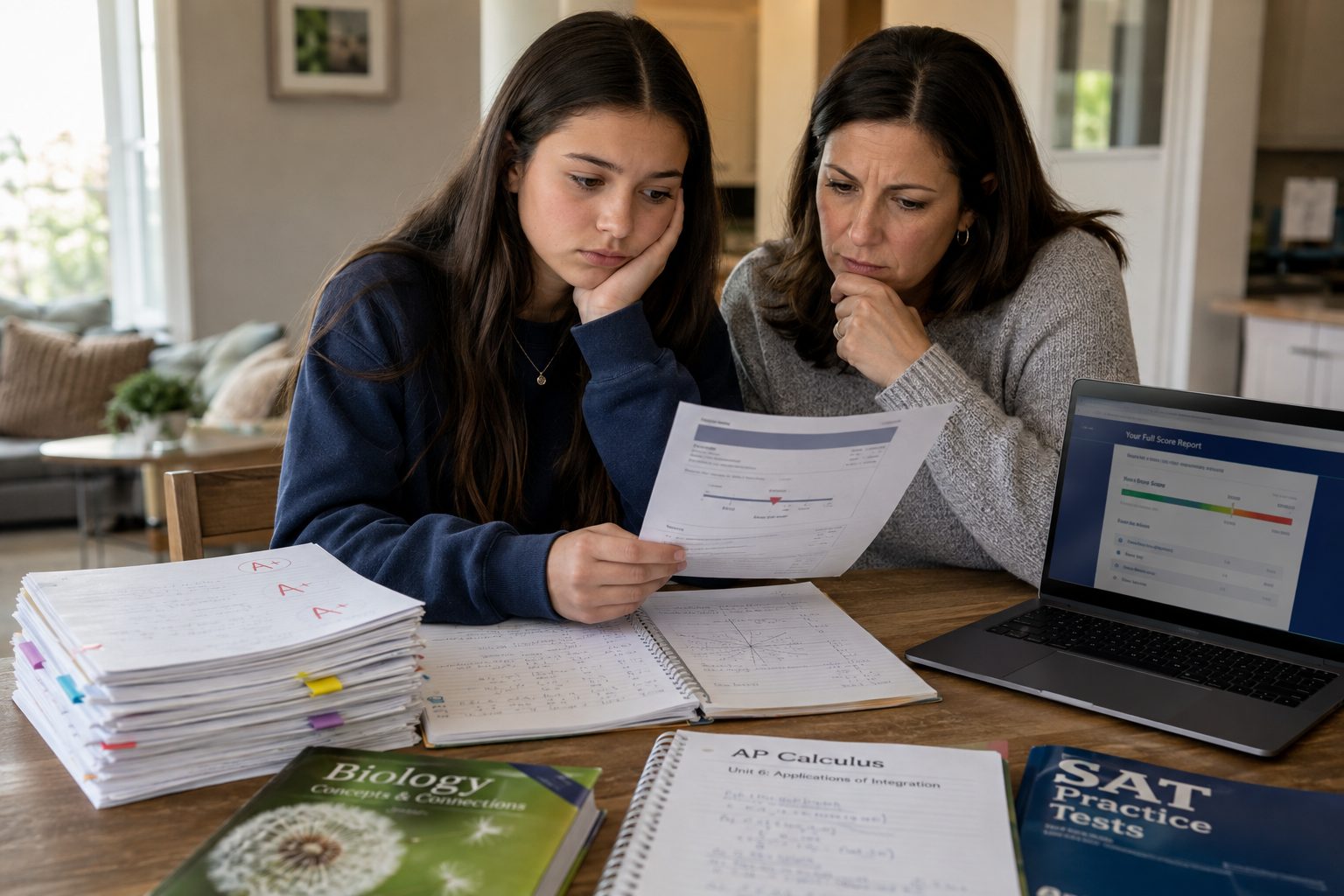
A parent called me a while back, half-worried and half-annoyed. "Victor, they changed the SAT again. It's on a computer now, it's shorter, and it changes the questions based on how you do. Is this a whole different test? Does everything we know still apply?" That's a fair set of questions, and I've heard versions of it from dozens of families since the change rolled out. So let me give you the plain-English version of what the digital SAT actually is, what genuinely changed, and what hasn't changed one bit.
The short answer: the format changed a lot, but the skills being tested did not. If your son or daughter can read carefully, reason through a passage, and handle solid algebra and data analysis, they are ready for this test. The rest is just learning the new container the questions come in.
What Actually Changed on the Digital SAT
Let me walk through the real differences, not the scary rumors.
It's on a computer. Students take the test on a laptop or tablet using the College Board's Bluebook app. No more filling in bubbles with a No. 2 pencil. You can take it at a test center or, in many cases, at school. The app has a built-in timer, an on-screen calculator (Desmos, which is genuinely useful), a formula sheet, and tools to flag questions and cross out answer choices. Students should download Bluebook and take the free practice tests inside it well before test day, so the interface feels boring and familiar by the time it counts.
It's shorter. The old paper SAT ran about three hours. The digital SAT is roughly two hours and fourteen minutes. That's a real gift. One of the hardest things about the old test was maintaining focus and stamina for three straight hours. A shorter test means fewer chances for fatigue to eat away at a strong student's score near the end.
Reading passages are much shorter. This is the change most students actually notice. On the old SAT, you'd read a long passage and then answer ten or eleven questions about it. On the digital version, each question has its own short passage (a paragraph or two) with a single question attached. You read a little, answer, move on. For students who struggled to hold a long, dense passage in their head, this is easier. For students who liked to build momentum with a long passage, it's an adjustment. Either way, it's not harder. It's just different.
The calculator is allowed the whole math section. On the paper test there was a no-calculator math section. On the digital SAT, you can use the built-in Desmos calculator for the entire math portion. I tell my students not to lean on it as a crutch, but knowing how to use Desmos well, especially the features related to graphing functions, can save real time.
The Adaptive Part, Explained Simply
Here's the piece that confuses people the most, so let me slow down. The digital SAT is what's called "multistage adaptive." Both the Verbal section and the Math section are split into two modules.
Everyone gets the same first module, with a mix of easy, medium, and hard questions. How a student does on that first module decides which second module they see. Think of it as two doors. Do well on module one and you go through the harder door: tougher questions, but that is where the top scores live. Struggle on module one and you go through the easier door: friendlier questions, but the highest scores are out of reach for that sitting.
Two things matter for parents to understand. First, the adapting happens between modules, not question by question. A single mistake on question three does not send the whole test into a tailspin. Second, this makes the early questions in the first module genuinely important. My advice to students is simple: treat the first module with respect. Slow down, be accurate, and earn the harder, more valuable second module. That's a strategy point that didn't exist on the old test, and it's exactly the kind of thing we drill in our SAT prep course.
Digital SAT vs. Paper: What Did NOT Change
This is the part I most want families to hear, because it's the part that keeps everyone calm.
The score scale is the same. It's still out of 1600, still split into a Verbal score and a Math score. A 1400 on the digital SAT means the same thing to a college as a 1400 on the paper SAT. Colleges are not treating this as some lesser or easier test.
The math content is the same. Algebra, linear equations, ratios and percentages, functions, a bit of geometry and trig, and data analysis. If your student has a solid grip on algebra and can read a chart or table without panicking, the math content holds no surprises.
The core skills are the same. Careful reading, understanding evidence, command of grammar and sentence structure, and clear quantitative reasoning. These are the same skills that mattered on paper, the same skills that matter in college, and honestly the same skills that matter in most careers. The test changed its clothes. The muscles it measures did not.
How to Prepare for the Digital SAT
Here's the approach I've seen work, in order of importance.
1. Get the fundamentals solid first. No amount of Bluebook familiarity fixes shaky algebra or grammar. The bulk of prep should still be on content and reasoning. This is where a good tutor earns their keep: finding the specific gaps and closing them. On our results page you can see the kind of gains that come from this, and almost none of them are about the format. They're about students getting genuinely stronger at the underlying skills.
2. Practice inside the real app. Download Bluebook and take the official practice tests the College Board provides for free. You want the on-screen calculator, the flag tool, and the timer to feel completely ordinary by test day. Nervousness on a new interface is a silent score-killer, and it's the easiest problem in the world to eliminate: just practice in the actual environment.
3. Learn to attack the first module. Because the test adapts between modules, accuracy early on has extra weight. Teach yourself to start steady and precise rather than rushing. Then, if the second module feels harder, good. That means you earned the high-scoring path.
4. Get comfortable with Desmos. Spend an afternoon just playing with the built-in graphing calculator. Learn to graph an equation and read off solutions, find intersections, and check answers quickly. It's a real advantage for students who know it well and a mild handicap for those who ignore it. This is a standard part of our SAT prep course at High Performance Tutoring: we help students get truly comfortable with Desmos, and we often teach them features they had never heard of that turn out to be extremely helpful on the SAT.
5. Take timed full-length practice tests. Even at two-plus hours, stamina and pacing still matter. Simulate the real thing a few times so nothing on test day is a surprise.
Frequently Asked Questions
Is the digital SAT easier than the paper SAT?
Not exactly. It's shorter and has bite-sized reading passages, which many students find more manageable, but the content and the scoring scale are the same. A strong score still requires strong skills. Easier to sit through, not easier to ace.
Does the adaptive format mean one wrong answer ruins my score?
No. The test adapts between two modules, not after every question. A few mistakes in a module won't sink you. Consistent accuracy across the first module is what unlocks the higher-scoring second module.
Can I still use scratch paper?
Yes. Students are given scratch paper for working out math and taking notes, even though the test itself is on a screen. I encourage using it: doing math entirely in your head or on the calculator is a good way to make careless errors.
How long is the digital SAT?
About two hours and fourteen minutes, plus check-in time. That's roughly 45 minutes shorter than the old paper test.
Do colleges accept the digital SAT the same as the old one?
Yes. It's the same 1600-point scale and the same official test. Colleges treat the score exactly as they always have.
I've been coaching students through college entrance tests for more than twenty years, and every few years the format shifts. Every time, some families panic and assume the ground has moved under their feet. It rarely has. The digital SAT is a cleaner, shorter, smarter version of a test that measures the same things it always did. Learn the new tools, respect the adaptive structure, and put the real work into the skills underneath. Do that, and the format change becomes a footnote instead of an obstacle.
If your student is preparing for the digital SAT and you'd like a straight read on where they stand, your first hour with us is completely free: no pressure, just an honest starting point. Your child's education is our first priority :)