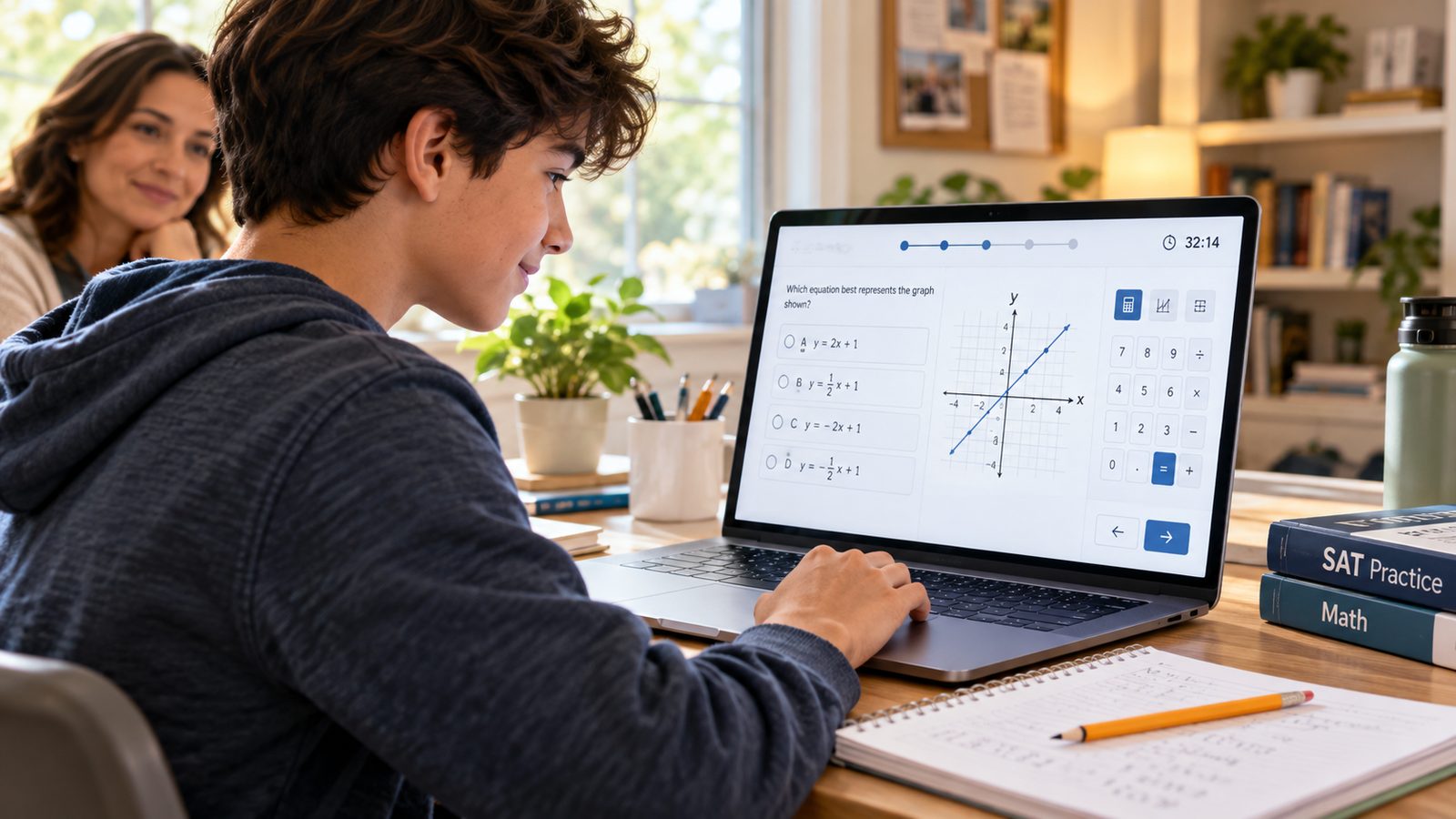
Of all the sections on the SAT, the one students tell me feels impossible to improve is Reading and Writing. I hear it constantly: "I studied for weeks and my math went up, but my verbal score barely moved." There is a good reason for this. Math has clear rules — you either know how to solve a system of equations or you don't. Reading feels squishier. It seems like some people are just "good readers" and some aren't, and there's nothing you can do about it.
Having spent over 20 years helping students prepare for this test, I can tell you that is a myth, the same way "some people are just bad at math" is a myth. The SAT Reading and Writing section is not a measure of how smart or well-read you are. It is a specific skill with specific patterns, and once you learn how the test actually works, your score can move — and I've seen it move a lot. Below are the exact strategies I teach my students to raise their SAT Reading score.
Why the Digital SAT Reading and Writing Section Is Different
First, you need to understand the format, because it changed in a way that works in your favor if you know how to use it. The old paper SAT gave you long passages — sometimes 700 or 800 words — with a batch of questions attached to each one. The digital SAT broke everything into bite-sized pieces. Now each question has its own short passage, usually just 25 to 150 words, and there is exactly one question per passage.
This is a big deal. On the old test, if you misread a long passage, you could lose four or five questions in a row. On the digital SAT, every question is its own self-contained puzzle. Misread one and you only lose one. This means the digital format rewards students who slow down and read carefully, because careful reading of a short paragraph is far more achievable than careful reading of a full page under time pressure. Most students who struggle are rushing through passages they could easily understand if they just gave themselves permission to read slowly.
The Reading and Writing Strategies That Actually Move Scores
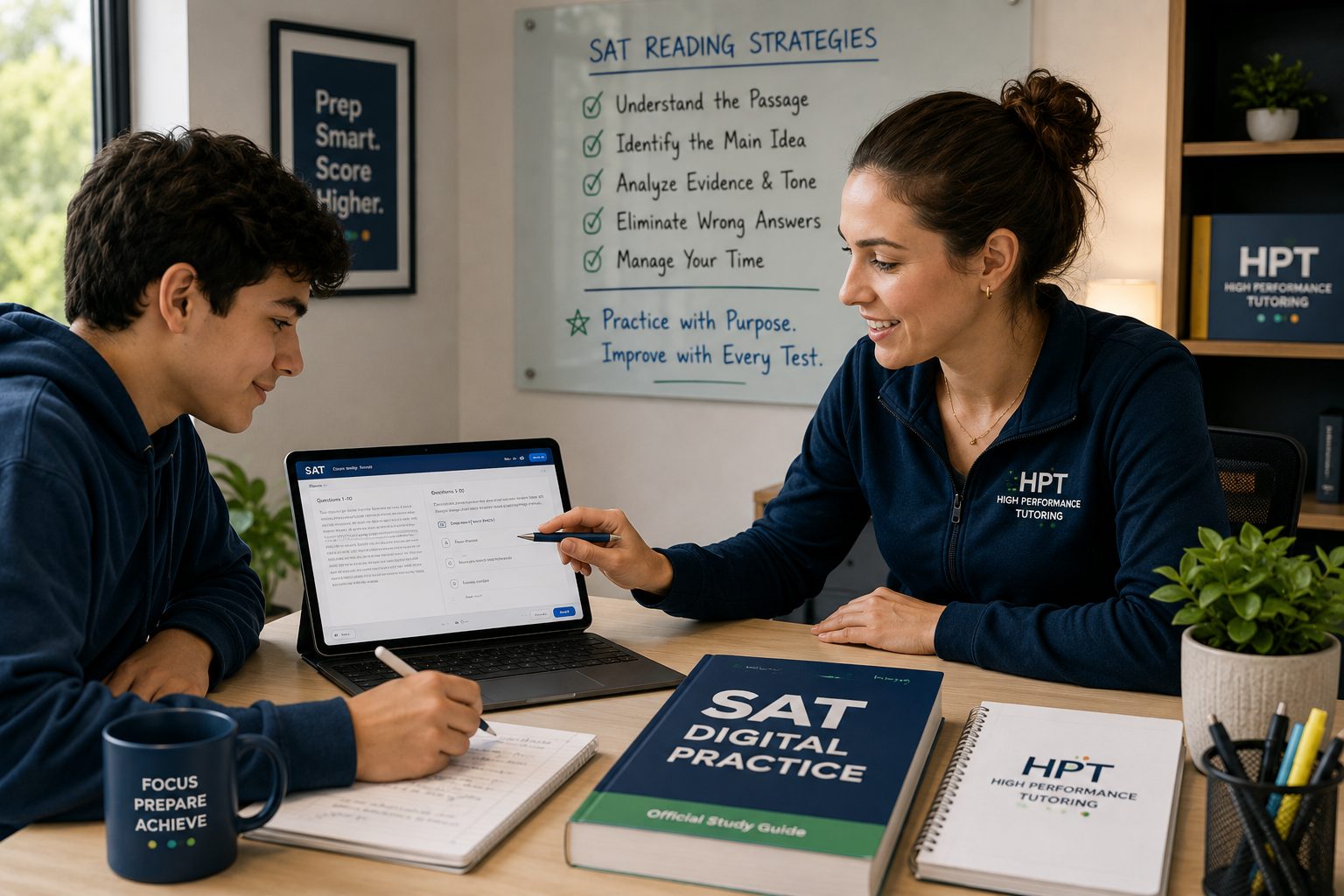
Here are the techniques I have students practice until they become automatic. None of these require you to be a "natural" reader. They require you to be a disciplined one.
1. READ THE QUESTION FIRST. Before you read the passage, read the question and figure out what it is actually asking. Is it asking for the main idea? A word's meaning in context? Which piece of evidence supports a claim? When you know what you're hunting for, you read the passage with purpose instead of just absorbing words and hoping something sticks. I have watched students shave their per-question time nearly in half with this one habit, and their accuracy goes up, not down.
2. ANSWER IN YOUR OWN WORDS BEFORE LOOKING AT THE CHOICES. This is the single most powerful technique I teach, and almost nobody does it on their own. After you read the passage and understand the question, cover the answer choices and answer it yourself in plain language. Then look at the four options and find the one that matches your answer. The reason this works is that the SAT writes wrong answers to be tempting — they use words from the passage, they sound sophisticated, they feel right. If you go into the choices without your own answer in mind, you're vulnerable to every trap. If you already know what you're looking for, the traps lose their power.
3. FOR EVIDENCE QUESTIONS, LET THE TEXT DO THE WORK. A big chunk of the Reading and Writing section asks you to find the sentence, statistic, or quotation that best supports a given conclusion. Students get these wrong because they pick the answer that "sounds related" instead of the one that logically proves the point. Ask yourself: if I were arguing this in a debate, which piece of evidence would actually win the argument? The correct answer directly and specifically supports the claim — not the answer that mentions the same topic. When there's a chart or graph involved, read the axis labels and units carefully before you look at the choices. The data question is almost always testing whether you read the graph correctly, not whether you understand the passage.
4. FOR VOCABULARY IN CONTEXT, IGNORE WHAT THE WORD USUALLY MEANS. The digital SAT loves "words in context" questions, and the trap is always the same: they pick a word you know and then use it in a way you don't expect. The word "novel" doesn't mean a book here — it means new. The strategy is to read the full sentence, cross out the blank, and put your own simple word in its place. Then match your word to the choices. Never pick an answer just because it's the definition you memorized. The test is checking whether you can read the sentence, not whether you own a thesaurus.
5. FOR GRAMMAR AND SENTENCE STRUCTURE, TRUST THE PATTERNS. Roughly half of this section is what used to be called "Writing" — punctuation, verb agreement, transitions, sentence boundaries. The good news is that these rules are finite and learnable. There are only so many ways the SAT tests commas, semicolons, and subject-verb agreement. When you see a transition question (however, therefore, for example), the answer depends entirely on the logical relationship between the two sentences. Is the second sentence agreeing, contrasting, or giving an example? Figure that out first, then pick the transition that matches. These questions are pure points once you drill the patterns, and they're the fastest place to gain score.
How to Manage Your Time on the Digital SAT
The Reading and Writing section on the digital SAT gives you two modules of 27 questions each, with 32 minutes per module. That works out to just over a minute per question. That sounds tight, but remember — the passages are short now. The students who run out of time are almost always the ones who reread passages three times because they never committed to an answer. Read the question, read the passage once with purpose, answer in your own words, match it, and move on. If a question stumps you, flag it and come back. Never let one hard question eat the time you need for three easy ones.
One more thing: the digital SAT is adaptive. Your performance on the first module determines the difficulty of the second. This means the first module matters enormously. Don't rush the beginning to "save time" — those early questions set your ceiling.
Frequently Asked Questions
How much can you improve your SAT Reading score?
More than most students expect. I regularly see students gain 60 to 150 points on the Reading and Writing section over a few months of focused practice, and our best students improve their overall SAT score by 300 points or more. You can see real score gains from our students on our results page. The verbal section is coachable — it just requires learning the test's specific patterns rather than reading more books.
Is SAT Reading harder than the math section to improve?
It feels harder because progress is less obvious, but it is very learnable. Math improvement comes from filling knowledge gaps. Reading improvement comes from changing habits — reading the question first, answering in your own words, and slowing down on short passages. Once those habits become automatic, the score moves.
What is the best way to prepare for the digital SAT Reading and Writing section?
Practice with real digital SAT questions from College Board's Bluebook app, and review every question you miss to understand why the wrong answer tempted you. Pattern recognition is everything. Working with a tutor accelerates this because a good coach spots the specific mistakes you keep repeating — mistakes you often can't see on your own.
Do I need to memorize vocabulary for the SAT?
Not the way students did years ago. The digital SAT tests vocabulary in context, so understanding how words function in a sentence matters far more than memorizing obscure definitions. Reading closely and using the surrounding sentence beats flashcards every time.
Here is what I want you to take from all this: the SAT Reading and Writing section is not a verdict on how smart you are or whether you were born a "reader." It is a game with rules, and every one of those rules can be learned. I have watched students who were convinced they were hopeless at this section walk out of the test grinning because they finally understood what it was really asking. That transformation never comes from talent. It comes from the right technique practiced until it feels like second nature — and that is something any student can build.
If your son or daughter wants a structured plan for raising their verbal score, our SAT prep course teaches these exact strategies with real digital SAT practice. Your first hour with us is completely free, so there's no risk in trying it. Your child's education is our first priority :)